Agrologist of record and soil monitoring in Richmond and Metro Vancouver
The named Professional Agrologist on your soil or fill file: placement oversight, monitoring visits, status reports, and the stamped closure report your ALC or municipal approval conditions call for.
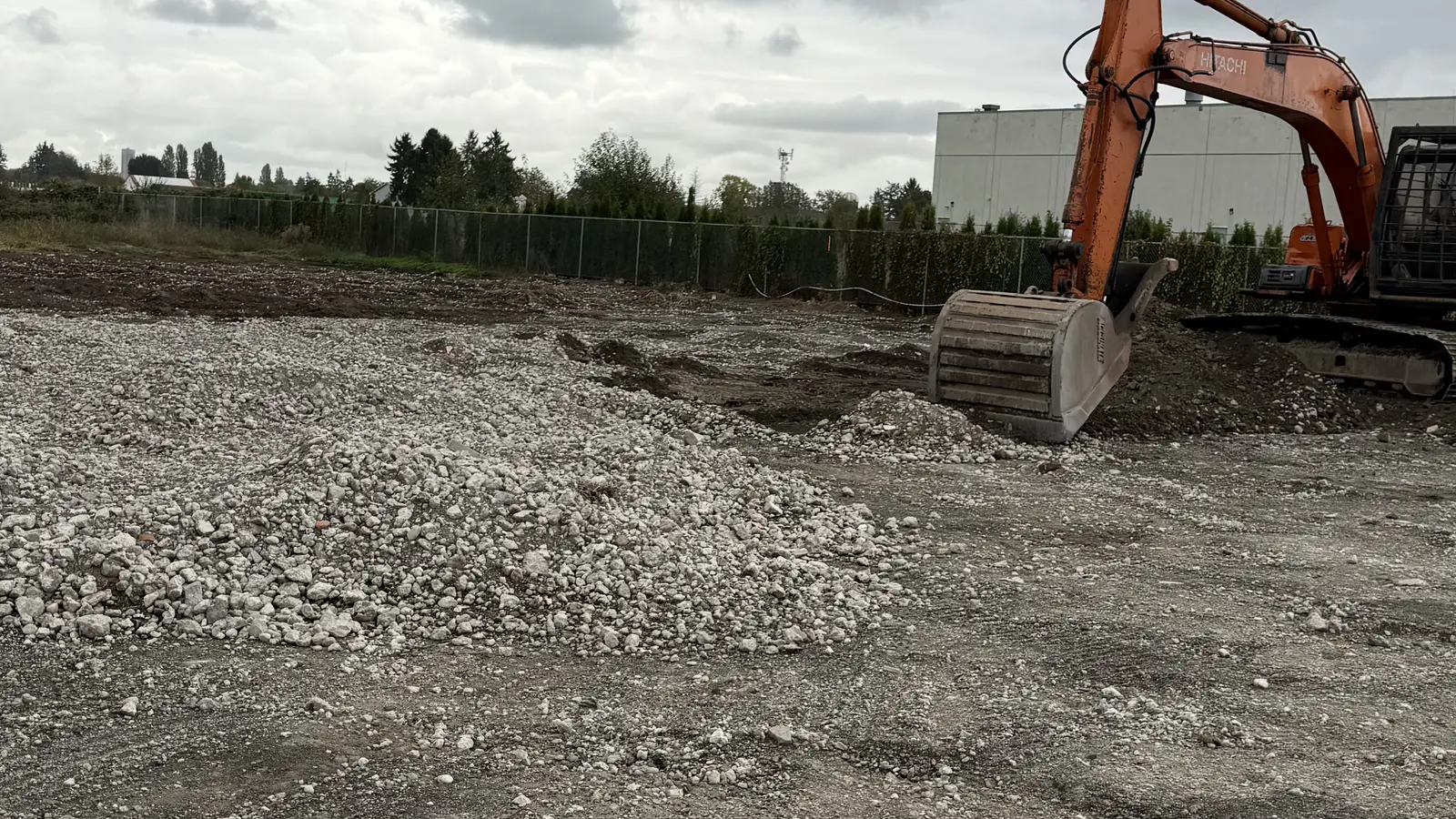
ALC and municipal approvals for soil and fill work can carry conditions: reports while the work runs, and a report from a qualified professional when it ends. We take that role as the agrologist of record on your file. We oversee soil and fill placement, run the monitoring visits and reports, check the work against your approval conditions, and prepare stamped P.Ag. reports at milestones and at closure.
What's included
- Agrologist-of-record appointment as the named Professional Agrologist on your ALC or municipal file
- A monitoring plan built from the conditions of your approval, permit, or management agreement
- Soil and fill placement oversight during active works, with the AOR present at the points that matter
- Scheduled monitoring visits, with photo-documented field records and sample logs for the regulatory file
- Status and monitoring reports on the schedule your approval sets
- Conformance checks comparing work as built against the specific conditions of your approval
- Stamped P.Ag. letters and memos at agreed project milestones
- A P.Ag.-stamped closure report stating whether the work met its conditions, for the regulator's close-out
- Qualitative observation of site and drainage conditions and their agricultural implications (detailed drainage design deferred to a qualified engineer)
- Liaison with ALC and municipal staff as the professional on the file, with R.P.Bio. coordination where riparian or biological conditions apply
What monitoring and the agrologist-of-record role is
When the Agricultural Land Commission (ALC) or a municipality approves soil or fill work, the approval can carry conditions: reports while the work is under way, limits on what is placed and where, and a report from a qualified professional once it is done. The professional who carries that part of the file is often called the agrologist of record (AOR).
Titrin AgriSoil Solutions takes that role. As your agrologist of record, Tishtaar (Tish) Titina, P.Ag., M.Sc., is the named Professional Agrologist on the file from the day work starts through to closure. We oversee soil and fill placement at the points that matter, run scheduled monitoring visits, write the reports for the regulatory file, check the work against your specific approval conditions, and prepare stamped P.Ag. reports at agreed milestones and at the end.
This is ongoing work. A one-off assessment captures conditions on one day. The AOR role runs the length of the project, so the closure report rests on what was seen while the fill was going in.
Where the requirement comes from
“Agrologist of record” is working shorthand. The phrase does not appear in the Agricultural Land Commission Act, the ALR Use Regulation, or the three soil bylaws below. Each instrument uses its own term and sets its own requirement, so the first job on any file is to read what yours says.
- ALC approvals. The Commission can grant permission for a use with limits or conditions (Agricultural Land Commission Act, section 25(1)), and its chief executive officer can approve a soil or fill notice of intent subject to limits and conditions (section 20.3(2)). ALC Policy L-23 (amended June 2026), which covers fill placed for soil bound agriculture, says the Commission will generally impose conditions when it approves fill placement. The typical ones it lists include status reports on fill placement progress, based on time or fill volume, and a closure report prepared by a Qualified Registered Professional to confirm that the approval conditions were fulfilled. The policy defines that professional as a person registered with a professional association, and names the engineers and geoscientists, the land surveyors and the BC Institute of Agrologists.
- Richmond. Under Soil Deposit and Removal Bylaw 10200, unless the General Manager exempts it, a permit application for an ALR property includes a Professional Agrologist’s report (section 4.1.1(h)), a Professional Agrologist’s certification that the soil to be deposited meets the criteria for the intended land use at the end site (section 4.1.1(i)), and an environmental assessment and independent monitoring plan of the operation (section 4.1.1(k)). While the permit runs, the permittee must keep current records sufficient for the City to monitor the work (section 6.1.2), and work that needed ALC approval must follow the limits and conditions the ALC set (section 3.4.3). At the end, the General Manager can ask for a final report from a Professional Agrologist confirming the project was completed as per the permit conditions (section 4.2.5). Our Richmond soil permit page covers the application itself.
- Surrey. The Soil Conservation and Protection By-law, No. 16389, does not name an agrologist. The City’s Soil Permit Application, the form for works over 100 cubic metres, does: it lists an agrologist report and agrologist supervision as required for soil deposit or removal works greater than 1,000 cubic metres within the ALR and on agriculturally zoned properties, or where remedial works are necessary. Our Surrey page covers the by-law’s exemptions.
- Pitt Meadows. Soil Deposit and Removal Bylaw No. 3000 requires a permittee moving 500 cubic metres or more to maintain monthly reports certified and sealed by a Qualified Professional, unless the work will be finished within a month of the permit being issued, and to submit a completion report sealed by a Qualified Professional at the end. Where the Director thinks the work may have adverse impacts on agriculture, the Director may also require a Professional Agrologist’s report and an independent monitoring plan. See our Pitt Meadows page.
- Elsewhere. Where another municipality regulates soil, the monitoring and reporting requirements come from its own bylaw, its application forms and the conditions written into the permit.
When you need an agrologist of record
You need one when your approval, permit or bylaw calls for monitoring or a professional’s report at completion, or when you want the record kept properly from the first load. Bring Titrin in when any of the following applies:
- An ALC decision or notice of intent approval for fill placement or soil removal on Agricultural Land Reserve (ALR) land carries conditions such as status reports or a closure report from a qualified professional.
- A municipal soil deposit permit calls for a monitoring plan, sealed periodic reports, agrologist supervision, or a final report at completion.
- A Reclamation Management Agreement or similar instrument commits you to monitored, reported work.
- Your approval letter references monitoring, periodic reports, a qualified professional (QP), or a report at closure.
- Fill is being placed on agricultural land and you want a continuous record of how it was sourced, placed, and checked, instead of reconstructing one afterward.
The common thread is a regulator who wants more than the owner’s word: an independent professional watching the work and reporting on it. A neighbour watching the trucks often wants the same thing, as our post on fill arriving next door explains.
How Titrin approaches the role
The first step is to read your approval closely. Conditions of approval are specific about what must be monitored, how often, what each report must show, and what the closure report must confirm. Titrin turns those conditions into a monitoring plan, so everyone, including your contractor, knows what the file requires before the first load of soil moves.
A typical program for fill placed on farmland covers three stages:
- Before the first load. The baseline: soil conditions and photos before any work, the topsoil salvage depth, where stockpiles will sit, and the approved area and depth marked on the ground. Fill sources are reviewed before they are accepted (see fill source siting and the source-site sign-off memo).
- During placement. Topsoil salvage and stockpiling, the loads arriving, the material against the prohibited fill list in section 36 of the ALR Use Regulation, and placement area and depth against the approved plan. In Richmond a permittee can be required to keep a truck log of each date and the number of trucks and amount moved (section 4.5.4). In Pitt Meadows the bylaw requires a daily log.
- After placement. Subgrade preparation, topsoil replacement, seeding, and how the finished surface drains.
ALC Policy P-15 (June 2026) sets out best management practices for these stages where fill is placed for soil bound agriculture. Among them: existing topsoil is to be salvaged under the direction of the Qualified Registered Professional before fill placement, on-site supervision by that professional is recommended during soil salvage, stockpiling, storage and replacement, and the filled area should be monitored after re-seeding to see whether drainage is sufficient.
Conformance checks. At each stage we compare the work as built against your approval conditions, so a departure is caught early and not discovered at the end.
Reporting. Titrin writes the status and monitoring reports your approval calls for: what was observed, and whether the work conforms.
Milestone and closure reports. At agreed milestones and at completion, Titrin prepares stamped P.Ag. letters and a closure report stating, on the strength of the monitoring record, whether the work met its conditions.
Monitoring also has a clock. A Richmond permit expires twelve months after it is issued unless the permit or a renewal sets another date (section 4.6.1), and Policy L-23 lists, among the considerations the Commission weighs, that fill placement should not extend beyond two years.
What the agrologist of record signs, and what belongs to others
A close-out package is usually several professionals’ work. Richmond’s list in section 4.2.5 shows the split: a topographic survey from a Registered Land Surveyor, a final lot grading plan signed and sealed by a Professional Engineer, a final report from a Professional Agrologist, final reports from a Qualified Environmental Professional or engineer, and, when applicable, written confirmation from the ALC that the project was completed as per its approval. ALC Policy P-15 likewise asks for cross sections prepared by a Professional Engineer or a BC land surveyor. Our report covers the soil and agricultural side. It does not stand in for the survey or the engineering, and the earthworks are carried out by your contractor.
“Professional agrologist” is a reserved title under the Agrologists Regulation (section 3), for registrants of the BC Institute of Agrologists. Tish Titina, P.Ag., is BCIA registrant no. 3512.
The decision to close a file is the regulator’s. In Richmond, the City does not have to release the security deposit until the close-out requirements are met to the General Manager’s satisfaction (section 4.2.7). A stamped report records what was done. It cannot make non-conforming work conform. If monitoring finds the work has moved off its conditions, we say so in writing while it can still be corrected. Our reclamation, closure and compliance page covers what a file needs once work has already gone wrong.
Throughout, we describe site and drainage conditions qualitatively and explain their agricultural implications. Detailed drainage, grading, or structural design is the work of a qualified engineer. Where riparian or biological conditions apply, Titrin works alongside Registered Professional Biologist (R.P.Bio.) partners.
Why Titrin
What matters in this role is judgement and accountability.
- A regulator’s-eye view. Tish Titina, P.Ag., spent more than a decade across the ALC and the City of Richmond before founding Titrin. Your reports are prepared by someone who has sat on the regulator’s side of the table and knows what makes a submission credible, and what gets it sent back.
- Direct access to the P.Ag. The professional who oversees the work and signs the closure report is the one named on your file. There is no hand-off to a junior, and the report reflects the site as actually built.
- One accountable point of contact. Titrin liaises with ALC and municipal staff as the professional on the file, so you are not interpreting regulatory language alone.
- Full-cycle delivery. Monitoring rarely stands alone. Titrin can connect the AOR role to the fill quality assessment, farm plan, or ALC application behind it, and, where a project needs construction delivery, coordinate with our licensed builder and general contractor.
Serving Richmond, the Fraser Valley, Vancouver Island, and the wider Metro Vancouver region, Titrin acts as the agrologist of record on soil and fill files. If your approval or permit calls for monitoring or a professional’s closure report, book a consultation.