Source-Site Sign-Off Memo for Soil Deposit
The sealed Professional Agrologist memo on the fill source that a receiving-site soil permit asks for: where the material comes from, what it is, how much, and whether it belongs on agricultural land.
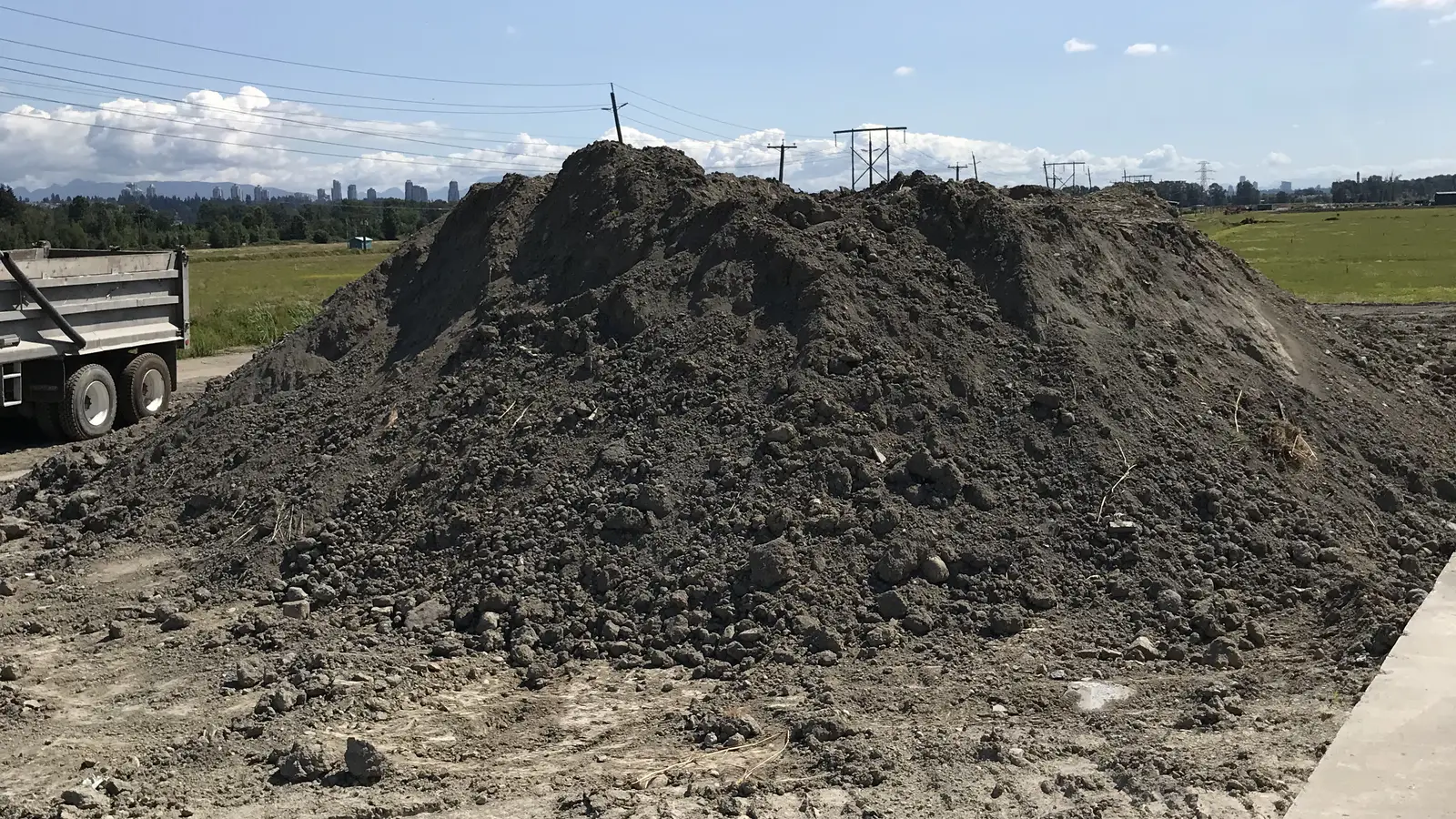
Before fill moves onto agricultural land, someone has to say in writing where it came from, what it is and whether it belongs there. Richmond's soil bylaw requires that certification from a Professional Agrologist; other Lower Mainland permits ask for the same information. The source-site sign-off memo is that document: short, sealed, and only as good as the records behind it.
What's included
- A sealed memo on the source site: its location and history from the records held, the material description and quantity, the assessment of suitability for placement on agricultural land against the standard the receiving permit names, and the haul and record-keeping plan
- The certification Richmond's Bylaw 10200 requires from a Professional Agrologist that the soil to be deposited meets the criteria for the intended use at the end site, with the source-site location the application must list
- One page of conditions the contractor can hand to the receiving-site owner and the bylaw officer
- A written statement of what the records do not establish and what would close the gap, where sampling is needed before anyone signs
Why the source matters more than the pile
A load of fill looks like a load of fill. What separates a permit that issues from a stop-work order is the paper behind it: where the soil was excavated, what the records say it is, and whether it meets the standard the receiving permit names. Richmond wrote that into its Soil Deposit and Removal Bylaw 10200, which requires, with an ALR application, a certification from a Professional Agrologist that the soil to be deposited meets the criteria for the intended land use at the end site, together with the location of the source sites. Other Lower Mainland municipalities ask for the same information with the application or as a condition, and the Commission’s policies on fill for soil-bound agriculture expect the material to be documented.
The source-site sign-off memo is that certification, written so that a soil bylaw officer, a receiving-site owner and the Commission can all rely on it. Our broader soil and fill source siting service finds and vets sources; this page is about the memo itself.
What is in it
The memo is short and specific. It sets out the source site and its history from the records the owner and contractor hold, the material description and the quantity, the assessment of suitability for placement on agricultural land against the standard the receiving permit names, and the haul and record-keeping plan that keeps the chain of custody intact from excavation to placement. It is sealed by a Professional Agrologist, a title reserved in British Columbia to registrants of the BC Institute of Agrologists, and it comes with one page of conditions the contractor can hand to the receiving-site owner and the bylaw officer.
Where the material is destined for ALR land, the memo tests it against the ALR Use Regulation’s prohibited-fill list as a matter of course: construction or demolition waste, asphalt, glass, synthetic polymers, treated wood and unchipped lumber are out, and recycled concrete or asphalt is permitted only for maintaining an existing farm road.
What we will not do
We will not certify what the records do not establish. An undocumented source is a deficiency, not a clearance, and a memo that papered over one would be worth nothing to the person relying on it. Where the records are incomplete we say what is missing and what would close the gap, and where sampling and laboratory analysis are needed we scope and quote them before anyone signs. A Phase 1 environmental site assessment on the source, where one is needed, is covered under our Phase 1 ESA service.
We also keep the two sides of a placement apart. Where Titrin holds the pen on a receiving site, writing its soil deposit application, certifying its fill or signing off its placement, we take no per-load interest in the material going onto it. That is what keeps the seal clean on both documents.
How it runs
Send the source address, the records you hold and the receiving permit or Commission decision. We confirm within one business day whether the records support a memo or what is missing, and the date the memo will be ready. The receiving side, the placement plan, the soil deposit permit report and the agrologist-of-record oversight, is scoped separately and can run alongside.
Titrin AgriSoil Solutions is based in Richmond and works across the Lower Mainland and the Fraser Valley. Tish Titina, P.Ag., M.Sc., reviewed fill files from inside the City of Richmond and the Agricultural Land Commission before founding the practice, and Richmond’s soil bylaw officers see these memos on live files. For the Richmond permit the memo supports, see soil deposit permits in Richmond.
If you have material to move, or a site about to receive it, send us the source, the records and the permit. We answer within one business day.